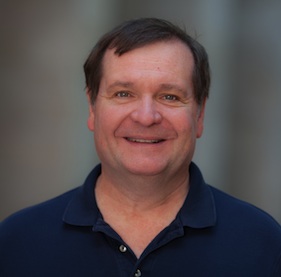
 Mark Stehlik
Mark Stehlik
Mark Stehlik
 School of Computer Science

University Teaching Professor of Computer Science (as of 2023!) [but I still prefer "Education Engineer"] :-)
was Teaching Professor (née Principal Lecturer) [but I prefer "Education Engineer"]
Assistant Dean for Outreach; co-founder of CMU CS Academy
Director of the CS Undergraduate Program
My SCS@home video
– one in a series of short talks for the SCS community, June 26, 2020
My charge to the 2020 CS graduates
– to be printed in the 2020 SCS Diploma Ceremony program, May 17, 2020
(including a shoutout to Abinaya Rajesh, '20)
CMU
Freshman Convocation 2017
– my keynote address starts at around 19:40, August 24, 2017
(text available here)
"What is Your Fractal Dimension?"
– my talk at TEDx Education City in Doha, Qatar, January 18, 2014
My 2012 commencement address
– given at the SCS Diploma Ceremony, May 20, 2012
My charge to the 2012 CS graduates
– printed in the 2012 SCS Diploma Ceremony program, May 20, 2012
I am an optimist by nature; a pragmatist by nurture.
"The life of an acadmic advisor is always intense."
– with apologies to Harry Dean Stanton as Bud in Repo Man
Trying to create "causal threads of goodness" since 1988.
– quoted phrase courtesy of Phil Syme, CS alum, '96
"How is it that someone as a great a curmudgeon as you manages to
simultaneously be a ray of sunshine on a gloomy Pittsburgh day?"
– Katie Wilson, CS alum, '04
"You're, like, a man page for life."
– Serene, CS alum, '12
"Like the Tardis, you're bigger on the inside!"
– Chris George, SCS alum, '20
"The mediocre teacher tells.
The good teacher explains.
The superior teacher demonstrates.
The great teacher inspires."
– William A. Ward
"A teacher affects eternity; he (she) can never tell where his (her) influence stops."
– Henry Brooks Adams (parenthetical pronoun additions mine)
"We look at people like Jack Pidgeon or the public school teacher who
stretched the envelope for 30 years as exceptions, as anachronisms,
because only the toughest can make a life of it. And that's the key.
Teaching's not a job, it's a life. It's a commitment for life to nurture life.
It should not be so much funded as held sacred. The fact that we count it as an
expense or that we have to run it like a business is a disgrace."
– David Conrad, writing on the occasion of Jack Pidgeon's retirement
as Headmaster of the Kiski School,
Pittsburgh Post-Gazette, May 25, 2002
"Children succeed in classrooms where they are expected to succeed.
Schools work best when they operate with a clarity of mission: as places to
help students master complex academic material. When teachers demand rigorous
work, students often rise to the occasion, whereas tracking students at
different cognitive levels tends 'diminish learning and boost inequality'."
– The Economist, August 17, 2013, review of Amanda Ripley's book,
The Smartest Kids in the World: and how they got that way
"It was clear to me that what Carnegie Mellon values in its faculty is
whether you have an impact.
They don't do anything silly like count your publications. What the school
wants is for you to change the world."
– Dave Andersen, CS faculty, quoted in Carnegle Mellon Today (7/12)
"When someone is struggling, the solution isn't to suddenly 'be better' "!
– quoted with permission of Angel Zhou, CS alum, '18
"Real change, enduring change, happens one step at a time."
– Ruth Bader Ginsburg
"The secret of change is to focus all of your energy not on fighting the old,
but on building the new."
– Socrates
"There is only one way to defeat the enemym and that is to write as well as
one can."
– Saul Bellow
"Age is a number; old (or young) is an attitude."
– me
"It's not the years, it's the mileage."
– Harrison Ford as Indiana Jones in Raiders of the Lost Ark
"We don't stop playing because we grow old; we grow old because we stop playing."
– George Bernard Shaw
"Many of us have been running all our lives. Practice stopping."
– Thich Nhat Hanh
"And in the end, the love you take is equal to the love you make."
– from "The End" by the Beatles, 1969
"It is not our abilities that show what we truly are.
It is our choices."
– Albus Dumbledore to Harry Potter in "The Chamber of Secrets"
"By the work one knows the worker."
– Jean de la Fontaine
"What you do is what you are;
how you do it is who you are."
– me (apologies to Aristotle)
"Don't tell me what the rule says; tell me what it means!"
– me
"It is insufficient to know. You must also do".
– me
"The people who get things done get more things to do."
– me
"Chaotic good is more useful (and more interesting) than lawful good."
– me, inspired by Ian Voysey, CS alum, '09
"The sectret of getting things done is to act."
– Dante Aligheri
"Words without actions are the assassins of idealism."
– Herbert Hoover
"If we are to better the future, we must disturb the present."
– Catherine Booth
"The only interesting answers are those which destroy the questions."
– Susan Sontag
"The correct answer isn't always one of the options."
– me
"If you're not living on the edge, you're taking up too much room!"
– Dodge truck commercial
"The Edge... there is no honest way to explain it because the only people
who really know where it is are the ones who have gone over."
– Hunter S. Thompson
"A people that values its privileges above its principles soon loses both."
– Dwight Eisenhower
"It is good to have an end to journey towards, but it is the journey that matters in the end."
– Ursula Le Guin (author of "The Lathe of Heaven", one of my favorite books)
"The best journeys are the ones that are not fully mapped out!"
– me
"The best way to bury the past is to succeed in the present!"
– me
"The longer you wait, the less time you have to do what needs to be done.
And the more likely it will be done poorly."
– me
"There are two ways you can show someone you appreciate their work:
recognize them or reward them. That's it."
– me
"Things are getting worse faster than I can lower my standards."
– Carrie Fisher
"There is a no more stupid, or more dangerous, way of making decisions
than to put those decisions in the hands of those who pay no price for being wrong."
– Thomas Sowell
"Freedom is not the ability to do anything we want, whenever we want.
Rather, freedom is the ability to live responsibly the truth of our relationship
with God and with one another."
– Pope John Paul II
"Respect does not come ex officio."
– seen on Bill Scherlis's white board
"Fight for the things that you care about, but do it in a way that will lead others to join you."
– Ruth Bader Ginsburg, June 2, 2015
"So often in life, things that you regard as an impediment turn out to be great, good fortune."
– Ruth Bader Ginsburg
"Perceived failure is oftentimes success trying to be born in a bigger way."
– fortune cookie
"Do not pray for an easy life, pray for the strength to endure a difficult one."
– Bruce Lee
"Success is not final, failure is not fatal; it is the courage to continue that counts."
– Winston Churchill
"I go through the same doubtful moments; the inner fight is always the biggest fight...
Trying to win that internal fight is a big challenge and, once you do that,
the external circumstances are more likely to go in your favor."
– Novak Djokovic on his "talk in the mirror" after dropping the first
two sets
in his Wimbledon quarterfinal against Jannik Sinner, only to win 3 sets to 2, July 5, 2020
"Life should not be a journey to the grave with the intention of arriving safely in a pretty
and well preserved body, but rather to skid in broadside in a cloud of smoke,
thoroughly used up, totally worn out, and loudly proclaiming, 'Wow! What a Ride!'"
– Hunter S. Thompson
"Education is not about the filling of a bucket but the lighting of a fire!"
– William Butler Yeats
"There is a C in STEM. Nothing will happen in the S, the T, the E, or the M
without the C."
– Jan Cuny, NSF, at SIGCSE 2010
"Teach your children other than that which you were taught; as they are created
for a time other than yours."
– HH Sheikh Hamad bin Khalifa Al Thani, quoting Ali bin Abi Taleb, on
the occasion of his transfer of power to his son, Sheikh Tamim, June 25, 2013
"There is a cult of ignorance in the United States, and there has always been.
The strain of anti-intellectualism has been a constant thread winding its way through
our political and cultural life, nurtured by the false notion that democracy means that
'my ignorance is just as good as your knowledge'."
– Isaac Asimov, 1980
"People cannot be taught about 'diversity'; they can only discover it through
personal experience."
– Everett Tademy, Director, Carnegie Mellon Equal Opportunity Services
"I am convinced that...we as a nation must undergo a radical revolution of
values.
We must rapidly begin the shift from a 'thing-oriented' society to a
'person-oriented' society."
– Martin Luther King, Jr. (probably true now more than ever...)
"The time is always right to do what's right."
– Martin Luther King, Jr.
"In the end, we will remember not the words of our enemies, but the silence of
our friends."
– Martin Luther King, Jr.
"The ultimate measure of a man is not where he stands in moments of comfort and convenience,
but where he stands at times of challenge and controversy."
– in "Strength to Love" by Martin Luther King, Jr., 1963
"It may well be that we will have to repent in this generation.
Not merely for the vitriolic words and the violent actions of the bad people,
but for the appalling silence and indifference of the good people who
sit around and say, 'Wait on time'."
– Martin Luther King, Jr. in his last sermon at the National Cathedral, 3/31/1968 (true then, truer now!)
"The arc of the moral universe is long, but it bends toward justice."
– Theodore Parker, attributed to Martin Luther King, Jr.
"The only lost cause is one we give up on before we enter the struggle."
– Vaclav Havel (last president of Czechoslovakia, 1989-92)
"Pravda vítězí (Truth prevails)"
– motto of the Czech Republic
"Truth prevails, but it's a chore."
– Jan Masaryk (Czech Foreign Minister, 1940-48)
"High though his titles, proud his name,
Boundless his wealth as wish can claim,
Despite those titles, power, and pelf,
The wretch, concentred all in self,
Living, shall forfeit fair renown,
And, doubly dying, shall go down
To the vile dust from whence he sprung,
Unwept, unhonored, and unsung."
– Sir Walter Scott, courtesy of Ian Voysey, CS alum, '09
"To laugh often and much;
to win the respect of intelligent people and the affection of children;
to earn the appreciation of honest critics and endure the betrayal of false
friends;
to appreciate beauty;
to find the best in others;
to leave the world a bit better, whether by a healthy child, a garden
patch or a redeemed social condition;
to know even one life has breathed easier because you have lived.
This is to have succeeded."
– Ralph Waldo Emerson
"...to be remembered simply as a good and decent man,
who saw wrong and tried to right it, saw suffering and tried to heal it...
Some see things as they are and say why? I dream things that never were and say why not?"
– something to aspire to from Ted Kennedy's eulogy for his brother, Bobby
A recitation of Frererick Douglass's July 5, 1852 "What to the Slave Is the Fourth of July" speech
– spoken, and commented, on by Frederick Douglass's descendants, July 3, 2020
A montage of Dr. Martin Luther King's "I Have a Dream" speech and, well, now.
– Jonathan Lane, june 9, 2020
"We will work to be an example of how we, as brothers and sisters on this earth, should treat each other.
Now, more than ever, the illusions of division threaten our very existence. We all know the truth:
more connects us than separates us. But in times of crisis the wise build bridges, while the foolish build barriers.
We must find a way to look after one another, as if we were one single tribe."
– the final words spoken by Black Panther, Chadwick Boseman (RIP, 8/28/2020)
"If not us, then who? If not now, then when?"
– Barack Obama awarding John Lewis (RIP, 7/2020) the Presidential Medal of Freedom, 2011
"It's not about having privilege, it's about what you do with your privilege."
– Walter Lewis, President of the Homewood Children's Village, September 15, 2020
"I will never change in my idea that nonviolence is the most potent weapon
available to the Negro in his struggle for freedom and justice. I would hope
that we could avoid riots because riots are self-defeating and socially destructive."
– Martin Luther King, Jr. in a 60 Minutes interview with Mike Wallace, 1966
"Intelligence plus character — that is the goal of true education."
– Martin Luther King, Jr. writing in the Morehouse College student newspaper
"The great aim of education is not knowledge, but action."
– Herbert Spencer
"Ignorance more frequently begets confidence than does knowledge."
– Charles Darwin
"In order to seek the truth, it is necessary that at least once in your life
you doubt, as far as possible, all things."
– René Descartes
"We're not the greatest country in the world, but we can be."
– Jeff Daniels opening monologe in The Newsroom's first episode
"The Constitution does not have all the answers. And when we pretend it does,
we empower unelected judges to make up the answers and attribute them to the
infinite wisdom of long-dead Framers."
– Mark Joseph (nice name!) Stern, writing in Slate, October 2, 2023
"When a clown moves into a palace, he doesn't become a king. The palace becomes a circus."
– old Turkish proverb
"Donald Trump is a poor man's idea of a rich man, a weak man's idea of a strong man,
and a stupid man's idea of a smart man."
– unatrributed, but the best one-sentence summary of DJT I have ever read
This update courtesy of the Jan. 6 insurrection hearings with respect to what
Trump knew and when he knew it, we have this tweet from former Obama AG Eric Holder:
"Trump - 'Just say the election was corrupt and leave the rest to me and the Republican congressmen.'
This is the smoking gun. Coupled with other testimony demonstrates both Trump's
substantive involvement and corrupt intent, requisite state of mind."
– Eric Holder tweet, June 23, 2022
This is Trump attempting to steal the election, not the other way around!
And if that isn't enough, there's this:
"What I want to do is this. I just want to find, uh, 11,780 votes,
which is one more than we have, because we won the state."
– Donald Trump on phone call with GA Secretary of State Brad Raffensperger, January 2, 2021
This is Trump stealing the election! Guilty as charged!! Why is this difficult to understand?!?
And while the Capital was under seige, Trump did nothing to intervene. He did,
however, call Rudy Giuliani and various senators about continuing the steal.
"You're the Commander in Chief. You've got an assault going on on the Capitol
of the United states of America. And there's nothing? No call? Nothing? Zero?"
– General Mark Milley, Chairman of the Joint Chiefs of Staff, on Trump's deriliction of duty
And these remarks from former Trump acting Deputy AG Richard Donoghue concerning
the replacing acting AG Jeff Rosen with environmental lawyer Jeff Clark on January 3, 2022:
"Mr. President, you're talking about putting a man in that seat who has never tried
a criminal case, who's never conducted a criminal investigation. He's telling you that
he's going to take charge of the department-115,000 employees, including the entire FBI,
and turn the place on a dime and conduct a nationwide criminal investigations that will
produce results in a matter of days? It's impossible. It's absurd. It's not going to happen.
It's going to fail. He has never been in front of a trial jury, a grand jury...
It's not going to happen. He's not competent."
Trump, being ever-so-presidential, concerning "waiving" executive privilege for Steve Bannon,
"When you first received the Subpoena to testify and provide documents, I invoked
Executive Privilege. However, I watched how unfairly you and others have been treated,
having to spend vast amounts of money on legal fees, and all of the trauma you must be
going through for the love of your Country, and out of respect for the Office of the President.
Therefore, if you reach an agreement on a time and place for your testimony, I will waive
Executive Privilege for you, which allows for you to go in and testify truthfully and fairly,
as per the request of the Unselect Committee of political Thugs and Hacks, who have allowed
no Due Process, no Cross-Examination, and no real Republican members or witnesses to be present
or interviewed. It is a partisan Kangaroo Court.
Why should these evil, sinister, and unpatriotic people be allowed to hurt and destroy
the lives of so many, and cause such great harm to our Country?"
Because, you jackass, you are the one continuing to cause great harm to this country!
Time for another update, this time from retired Lt. Col. Alexander Vindman:
"Sharp-elbowed politics is not against the law, nor should it be. It has always been
fair game to criticize public figures. But what happened to me was something different.
I was attacked in a way calculated to inflict maximum personal and professional damage
likely in order to prevent me from testifying or to punish me for doing so.
In this country, that violates the law...
My lawsuit isn't meant to relitigate Trump's conduct with respect to Ukraine or
the merits of his impeachment. But the impeachment process is the primary tool our
Constitution provides for holding our chief executive accountable outside of elections,
and Trump tried to obstruct that process. While the impeachment proceedings are
over and done with, the broader harm to our democracy has not been redressed, and
the lasting threat to other government officials who want to do the right thing remains today."
– Lt. Col. Alexander Vindman (ret.) in an op-ed concerning his lawsuit against Trump, etal., February 2, 2022
I haven't made an entry here in almost a year, but the Jan. 6 Insurrection
hearing compels comment.
Once all the committee members had made their statements, then it was time for the
police officers to have their say. They said dozens of things that got a lot of play
on social media, news broadcasts, websites, etc. Here are some of the most notable:
Daniel Hodges:
"To my perpetual confusion, I saw the thin blue line flag,
a symbol of support for law enforcement, more than once being carried by the
terrorists as they ignored our commands and continued to assault us."
Aquilino Gonell:
"There was nobody else. It was not Antifa, or Black Lives Matter, or the FBI.
It was [Donald Trump's] supporters that he sent over to the Capitol that day ...
He talks about sacrificing ... and the only thing he sacrificed was the institutions
of the country, and the country itself, only for his ego ... The rioters called me traitor,
a disgrace, and shouted that I, an Army veteran and a police officer, should be executed."
Harry Dunn:
"Then the crowd, perhaps around 20 people, joined in, screaming 'Boo! Fucking n*****!' ...
And as Black officers, I believe we fought a different battle also, and the fact that we had
our race attacked and just because of the way we look, you know, to answer your question,
frankly, I guess it is America. It shouldn't be, but I guess that's the way things are."
Michael Fanone:
"My law enforcement career prepared me to cope with some of the aspects of this experience.
Nothing has prepared me to address those elected members of our government who continue
to deny the events of that day, and in doing so, betray their oath of office."
– electoral-vote.com, July 28, 2021
The Washington Post adds this comment from Officer Fanone:
"So many of the people I put my life at risk to defend are downplaying or outright denying what
happened. I feel like I went to hell and back to protect them and the people in this room.
But too many are now telling me that hell doesn't exist or that hell actually wasn't that bad."
– what have we become as a nation for this to be true?
"We may be turning a corner with this virus, but the corner we turned is down a dark alley of
record infections and deaths. Mr. Trump is a self-proclaimed expert on a wide variety of topics,
but when pushed on basic topics he doesn't want to discuss, he very quickly feigns ignorance.
...
Since Trump took over, the national debt has exploded by more than 7 TRILLION dollars.
While the last several trillion was in response to the COVID-19 economic crisis,
at least the first three trillion was on the books well before the pandemic, while Trump was
presiding over '...the best economy we've ever had in the history of our country.' (Trump's words.)
...
Donald Trump did not create the social-media-driven political landscape we now live in,
but he has weaponized it. He is a consummate linguistic takedown artist, ripping apart all comers
to the delight of his fanbase but at the expense of the nation. America faces many challenges
and needs a president to build this country up. This appears to be outside of Mr. Trump's skill set.
...
President Trump is not always 100 percent wrong, but he is 100 percent wrong for America."
– New Hampshire Union Leader editorial, October 25, 2020
The Union Leader has not endorsed a Democatic presidential candidate in over 100 years!
Reap what you sow, Donald. Time for our national nightmare to end.
And it wasn't the first time the NH Union Leader has had something to say about Donald calling him,
"a crude blowhard with no clear political philosophy and no deeper understanding of the important and
serious role of President of the United States than one of the goons he lets rough up protesters in his crowds."
– New Hampshire Union Leader editorial, 2016
The New York Times reports, in the context of the Trump tax return scandal,
on the influence peddling that has created a gold-plated new swamp.
– New York Times, October 10, 2020
Instead of draining the swamp, Trump has created a great, strong, beautiful swamp!
Just dropped off my ballot at a local election this weekend. I voted for "ByeDon"! You should, too!!
"All Trump can see from Park Avenue is Wall Street. All he thinks about is the stock market."
– Joe Biden during CNN drive-in town hall, September 17, 2020
Bazinga!
"Remember: every example of violence Donald Trump decries has happened on his watch.
Under his leadership. During his presidency."
– Joe Biden tweet, August 28, 2020
Bazinga!
"The Trump re-election strategy seems to be to argue that only Donald Trump
can save America from Donald Trump's America."
– Dan Rather tweet, August 27, 2020
"There's perhaps nothing more emblematic of his presidency than this wall.
It's destructive, pointless, ineffective, racist, weak, and something the damages of
which we're going to have to be dealing with for a very long time."
– John Oliver at the end of Last Week Tonight's "Border Wall II" episode, August 23, 2020
And, in the "Trump continues to just make shit up" department...
which, like Pinocchio's nose, has grown so much there are now two separate blogs:
the original, just making shit up, page
and, more specifically, Trump in COVID/BLM-Time
Speaking of...
"Unprecedented, historic corruption: an American president commutes the sentence
of a person convicted by a jury of lying to shield that very president."
– Senator Mitt Romney in response to Trump commuting Roger Stone's sentence, July 11, 2020
Meet the new swamp, the gold-plated new swamp!
"I speak to your shame. Is it so, that there is not a wise man among you,
not even one, who shall be able to judge between his brethren?"
– 1 Corinthians 6:5
I guess there is one such wise man...
A drinking game...
"I want to thank President Trump for his (outstanding) leadership and support."
– said by every Trump lackey at every briefing, always
I think it should be a drinking game! One shot each for mention;
guaranteed you won't make it to the end of the briefing without passing out!!
"I woke up today, I was crying
Lost in a lost world
'Cause so many people are dying
Lost in a lost world
Some of them are living an illusion
Bounded by the darkness of their minds
In their eyes it's nation against nation against nation
With racial pride
Sad hearts they hide
Thinking only of themselves
They shun the light
They think they're right
Living in their empty shells!
Oh, can you see their world is crashing
Crashing down around their feet
Angry people in the street
Are telling them they've had their fill
Of politics that wound and kill
Grow the seeds of evolution
Revolution never won
It's just another form of gun
To do again what they have done
With all our brothers' youngest sons!
(so many people, so many people)
Everywhere you go you see them searching
Everywhere you turn you feel the pain
Everyone is looking for the answers
Well, look again
Come on my friend
Love will find them in the end!"
– lyrics to "Lost in a Lost World" by The Moody Blues, 1972
Listening to NPR this morning, I felt like the Native American
portrayed in that iconic anti-pollution PSA from the 70's.
I am shedding tears for what my country has become.
– me, 3/4/2020
And then, not 3 weeks later, a reminder that the heart of this country still beats in my hometown:
"And we're going to get through it because we are New York, and because we've
dealt with a lot of things, and because we are smart. You have to be smart to
make it in New York. And we are resourceful, and we are showing how resourceful
we are. And because we are united, and when you are united, there is nothing
you can't do. And because we are New York tough. We are tough. You have to be
tough. This place makes you tough. But it makes you tough in a good way. We're
going to make it because I love New York, and I love New York because New York loves you.
New York loves all of you. Black and white and brown and Asian and short and
tall and gay and straight. New York loves everyone. That's why I love New
York. It always has, it always will. And at the end of the day, my friends,
even if it is a long day, and this is a long day, love wins. Always. And it
will win again through this virus. Thank you."
– the conclusion of Andrew Cuomo's daily briefing, 3/24/2020
"The highest patriotism is not a blind acceptance of official policy,
but a love of one's country deep enough to call her to a higher standard."
– George McGovern
"The hottest places in hell are reserved for those who maintain their
neutrality in times of moral crisis."
– John F. Kennedy, quoting (not accurately) Dante's "Inferno"
"What we ignore, we empower."
– Chris Cuomo, CNN, July 3, 2018
"The poor need the rich to provide for their bodies;
but the rich need the poor to provide for their souls."
– from Fr. Alek Schrenk sermon on Luke 16:19-31, September 29, 2019
"It's hard not to see male entitlement and aggression as toxic forces
degrading our culture.
But it's also hard not to notice that the world is now run by the aggressive
and the bullying."
– Will Leitch, "How to Raise a Boy", in New York Magazine, March 5, 2018
"A happy life consists not in the absence, but in the mastery of hardships."
– Helen Keller
"There is no greater gift than to realize how precious it is to be alive
and to know how infinitely small our lives are, yet how great we can be!"
– from the CNN series, "Believer", 4/5/2017
"New is not a virtue; better is a virtue!"
– Takeo Kanade, CMU Robotics Professor
"Cursing a flat tire does not fix it."
– seen on a calendar in Maribor, Slovenia
"But it does make you feel better!"
– me
"Start by doing what's necessary;
then do what's possible;
and suddenly you are doing the impossible."
– St. Francis of Assisi
"God, grant me:
Serenity to accept the things I cannot change,
Courage to change the things I can, and
Wisdom to know the difference."
– Reinhold Niebuhr
"It is far harder to kill a phantom than a reality."
– Virginia Woolf
"I like to pay taxes. With them, I buy civilization"
(something we seem to have forgotten nowadays)
– Oliver Wendell Holmes, Jr.
"Praise, like gold and diamonds, owes its value only to its scarcity."
– Samuel Johnson
"No man becomes rich unless he enriches others."
– Andrew Carnegie
and, similarly,
"Only a life lived for others is a life worthwhile."
– Albert Einstein, quoted in remembrance of Nelson Mandela, 1918-2013
and, one last time,
"True wealth is not measured in money or status or power.
It is measured in the legacy we leave behind for those we love and those we inspire."
– Cesar Chavez
"Dollars have never been known to produce character,
and character will never be produced by money."
– W.K. Kellogg
"Those who trust us, educate us."
– George Eliot
"The role of a coach, and the role of a teacher, is to inspire."
– Po-Shen Loh, CMU Math Professor
"I was going to graduate in 9 days, but I guess now I won't be. Can I have
some more candy?"
– an anonymous senior after the UCT final (who did pass!)
"Education is, quite simply, peace-building by another name.
It is the most effective form of defense spending there is."
– Kofi Annan, former Secretary-General of the United Nations
"The only thing necessary for the triumph of evil is for good people to do
nothing."
– attributed to Edmund Burke, 1776
"Never doubt that a small group of thoughtful, committed citizens can change the world;
indeed, it's the only thing that ever has."
– Margaret Mead
"We are not educated well enough to perform the necessary act of intelligently
selecting our leaders."
– Walter Cronkite
"Edge cases are always important: in programming; in life."
– me
"But, you don't make policies around edge cases;
you make policies for the nominal case and deal with the edge cases as the
exceptions they are."
– me
"Show me how you drive, and I'll tell you who you are."
– Vin Diesel (as Dom Toretto) in Fast & Furious 6
"A good exit is a quick one."
– Geoffrey Hitch, lecturing in Business Acting II, June, 2013
"The Lord God has given me a well-trained tongue,
that I might know how to speak to the weary a word that will rouse them.
Morning after morning he opens my ear that I may hear;
and I have not rebelled, have not turned back.
I gave my back to those who beat me,
my cheeks to those who plucked my beard;
my face I did not shield from buffets and spitting."
– a favorite, always inspiring, passage from Isaiah 50:4-6
"This is wrong on so many levels, I need a whiteboard!"
– anonymous
"A tyrant is a man not having control of himself who attempts to rule others;
a real slave to the greatest fawning; a man who throughout his entire life
... is full of fear."
– Plato's "Republic"
"The whole world rightly condemns the use of chemical weapons in Syria,
but the US attack on the Assad regime does nothing to lower tensions, nor will it
hasten peace in that country. Too often, rash responses to horrific situations are about
the conscience of the attacker rather than a clear-headed response to an awful situation."
– Paul Nuttall, leader of the UK Independence Party (who I never
thought I would ever agree with!), 4/7/2017
"The problem with free speech is that it's hard, and self-censorship is the
path of least resistance.
But, once you learn to keep yourself from voicing unwelcome thoughts,
you forget how to think them — how to think freely at all — and ideas perish at conception."
– George Packer on the murders of Washiqur Rahman and Avijit Roy,
quoted in The New Yorker, April 13, 2015
"If you can keep your head when all about you
Are losing theirs and blaming it on you,
If you can trust yourself when all men doubt you,
But make allowance for their doubting too;
If you can wait and not be tired by waiting,
Or being lied about, don't deal in lies,
Or being hated, don't give way to hating,
And yet don't look too good, nor talk too wise:
If you can dream—and not make dreams your master;
If you can think—and not make thoughts your aim;
If you can meet with Triumph and Disaster
And treat those two impostors just the same;
If you can bear to hear the truth you've spoken
Twisted by knaves to make a trap for fools,
Or watch the things you gave your life to, broken,
And stoop and build 'em up with worn-out tools:
If you can make one heap of all your winnings
And risk it on one turn of pitch-and-toss,
And lose, and start again at your beginnings
And never breathe a word about your loss;
If you can force your heart and nerve and sinew
To serve your turn long after they are gone,
And so hold on when there is nothing in you
Except the Will which says to them: 'Hold on!'
If you can talk with crowds and keep your virtue,
Or walk with Kings—nor lose the common touch,
If neither foes nor loving friends can hurt you,
If all men count with you, but none too much;
If you can fill the unforgiving minute
With sixty seconds' worth of distance run,
Yours is the Earth and everything that's in it,
And—which is more—you'll be a Man, my son."
– "If—" by Rudyard Kipling
"Perfection is not attainable but, if we chase perfection, we can catch excellence."
– Vince Lombardi (1933 graduate of St. Francis Prep in New York, my HS alma mater)
"The job of clever people is to ask difficult questions.
The job of very clever people is to ask deceptively simple ones."
– article on Ronald Coase in The Economist, September 7, 2013
"It doesn't make sense to hire smart people and then tell them what to do;
we hire smart people so they can tell us what to do."
– Steve Jobs
"Dance your best dance and let others dance theirs.
You cannot manage people for them to create knowledge or innovation.
You must let them dance their best dance to unveil their best potential, and
innovation comes from there."
– Eva Chen, Trend Micro CEO, quoted in a CNN interview
"What made Nico (A. Nico Habermann, founding Dean of SCS) a great leader?
First, Nico was a man of principles and that was important.
Second, when Nico made a decision, he didn't just tell you the decision;
more importantly, he articulated the priniciples that inevitably led to that
decision."
– Tom Mitchell, CMU Machine Learning Professor, giving the Habermann Lecture
at CMU-Q, February 4, 2014
"We want only one thing — to be the best. What else is there?"
– Chrysler print ad, circa mid-1980's
"To win without risk is to triumph without glory."
– Pierre Corneille
"A room without books is like a body without a soul."
– Cicero
Rules in the School of Mark Stehlik:
(as told by David Kosbie, May 31, 2012)
(and then reiterated in an
article in the Fall 2012
issue of "The Link", the CMU SCS newsletter)
1. Students come first, no matter what.
2. If you want people to work hard, you have to work harder
3. Attend to the whole student, not just their mind.
Corollary 1 — Mark's Teaching Axioms:
1. Be prepared! (do your homework beforehand)
(learning objectives drive assignments drive instructional strategies)
2. Know your students! (by name)
3. Be enthusiastic! (about the subject)
4. Be enthusiastic! (about teaching it)
5. Be enthusiastic! (about supporting their learning)
Corollary 2 — Mark's Advising Axioms:
1. Listen effectively
2. Be welcoming/open
3. Be non-judgmental/objective
4. Be honest
5. Be consistent
"The best way to lead is by example — it is far better to show people
what is expected than to tell them."
– me
"If you are going to hold those around you to a standard, you have to hold
yourself to a higher standard."
– me
"It is important to take what you do seriously, but it is equally
important not to take yourself too seriously."
– me
"Far better is it to dare mighty things, to win glorious triumphs, even though
checked by failures...
than to rank with those poorer spirits who neither enjoy nor suffer much,
because they live in a gray twilight that knows not victory nor defeat."
– Teddy Roosevelt
"Life is not about waiting for the storm to pass; it's about learning to dance
in the rain!"
– Vivian Greene
"Always do right; this will gratify some people and astonish the rest."
– Mark Twain
"There is no limit to what a man can achieve as long as he doesn't care who
gets the credit for it."
– attributed to Charles Edward Montague (and others)
"But the thing that makes a good life isn't constantly being saintly —
it's just continuing to do (stuff).
We spend so much time waiting to start to live."
– Quinn Norton on the death of Aaron Swartz, quoted in The New Yorker, March 11, 2013
"What makes someone a New Yorker? (posed to comedian Denis Leary):
'If the Popemobile happened to cut you off in traffic and you immediately gave
it the finger, you, my friend, are a New Yorker.'"
– New York magazine, October 6, 2008
"True love does not consist in gazing at each other, but in looking outward
together in the same direction."
– Antoine de Saint-Exupery
"Can't we give ourselves one more chance
Why can't we give love that one more chance
Why can't we give love, give love, give love, give love...
'Cause love's such an old fashioned word
And love dares you to care for
The people on the edge of the night
And love dares you to change our way of
Caring about ourselves
This is our last dance
This is our last dance...
This is ourselves
Under pressure"
– from "Under Pressure" by David Bowie & Queen, 1981
Me (to Herb Simon, Nobel Prize winner, as we walked toward each other on campus
on a Saturday afternoon):
"Herb, what are you doing on campus? Today's not a work
day."
Herb (to me): "If you love what you do, every day's a
work day."
What a wonderful motto!
"Work is love made visible.
And if you cannot work with love but only distaste,
it is better that you should leave your work
and sit at the gate of the temple and take alms of those who work with joy."
– Kahlil Gibran, The Prophet: On Work
"Find your passion first, job second."
– AT&T print advertisement
"Nothing great in the world has been accomplished without passion."
– Georg Friedrich Hegel
"Good days, bad days, but never a boring day on this job. You do what God has
called you to do. You show up, you put one foot in front of the other, and
you do your job, which is a mystery and a surprise. You have no idea...what
God is calling you to. But he needs you, so keep going. Keep
supporting each other. Be kind to each other. Love each other. Work
together. You love the job. We all do. What a blessing that is."
– Fr. Mychal Judge, FDNY chaplain, rededicating a Bronx firehouse
on 9/10/01,
24 hours before perishing at Ground Zero
from a very moving
biography in the November 12, 2001 issue of New York Magazine
Of particular relevance as my parents entered their
eighties (God rest their souls)...
"The simple view is that medicine exists to fight death and disease, and that
is, of course, its most basic task. Death is the enemy. But the enemy has
superior forces. Eventually it wins. And, in a war that you cannot win, you
don't want a general who fights to the point of total annihilation. You don't
want Custer. You want Robert E. Lee, someone who knew how to fight for
territory when he could and how to surrender when he couldn't, someone who
understood that the damage is greatest if all you do is fight to the bitter
end."
– from "Letting Go: What should medicine do when it can't save your
life?",
an excellent article by Atul Gawande, M.D. in The New Yorker, August 2, 2010
 The text of my
Keynote Address at Convocation, August, 2017. The text of my
commencement address at the SCS Diploma Ceremony, May, 2012. The text of my
printed entry in the 2012 SCS Diploma Ceremony program, May, 2012. The text of my
remarks on receiving Carnegie Mellon's
Robert E.
Doherty Award for Sustained Contributions to Excellence in Education,
April, 2012. The text of my interview for the
SCS Interview Series, October, 2007.
The text of my Siemens
Keynote given at the Siemens Competition Regional Finals in Pittsburgh,
November, 2006. A reflection on
teaching on the occasion of winning the Herbert A. Simon Award for
Teaching Excellence in Computer Science in 1997. The text of my
Keynote Address at the first annual Carnegie Mellon Convocation, August,
1996. The perfect advising quote, "Good judgment
comes from experience; experience comes from bad judgment." – Fred
Brooks
The text of my
Keynote Address at Convocation, August, 2017. The text of my
commencement address at the SCS Diploma Ceremony, May, 2012. The text of my
printed entry in the 2012 SCS Diploma Ceremony program, May, 2012. The text of my
remarks on receiving Carnegie Mellon's
Robert E.
Doherty Award for Sustained Contributions to Excellence in Education,
April, 2012. The text of my interview for the
SCS Interview Series, October, 2007.
The text of my Siemens
Keynote given at the Siemens Competition Regional Finals in Pittsburgh,
November, 2006. A reflection on
teaching on the occasion of winning the Herbert A. Simon Award for
Teaching Excellence in Computer Science in 1997. The text of my
Keynote Address at the first annual Carnegie Mellon Convocation, August,
1996. The perfect advising quote, "Good judgment
comes from experience; experience comes from bad judgment." – Fred
Brooks
"If you're not TOTALLY APPALLED, you're not paying attention!"
– bumper sticker (a wonderful motto for these past
four eight years [to be clear, the years in question
are 2000-2008])
"When will we again have a President who says, Don't judge me by what I do for
those who have much but for what I can do for those who have little?"
– William vanden Heuvel speaking about F.D.R. in The New Yorker,
August 15 & 22, 2011
"Gun-control advocates say the answer to gun violence is fewer guns.
Gun-rights advocates say that the answer is more guns: things would have gone
better, they suggest, if the faculty at Columbine, Virginia Tech, and Chardon
High School had been armed. That is the logic of the concealed-carry movement;
that is how armed citizens have come to be patrolling the streets. That is not
how civilians live. When carrying a concealed weapon for self-defense is
understood not as a failure of civil society, to be mourned, but as an act of
citizenship, to be vaunted, there is little civilian life left."
– from "Battleground America",
an excellent article by Jill Lepore in The New Yorker, April 23, 2012
"The trouble with so much of the conservative critique of Obama's foreign
policy is that it cares less about outcomes than about the assertion of
America's power and the affirmation of its glory. In the case of Libya, Obama
led from a place of no glory and, in the eyes of his critics, no results could
ever vindicate such a strategy. Yet a calculated modesty can augment a
nation's true influence. Obama would not be the first statesman to realize
that it can be easier to win if you don't need to trumpet your victory."
– David Remnick editorial, The New Yorker, September 5, 2011
"The damage visited upon America, and upon America's standing in the world, by
the Bush Administration's reckless mis-handling of the public trust will not
easily be undone....
Pollsters like to ask voters which candidate [Bush or Kerry] they'd most like
to have a beer with, and on that metric Bush always wins. We prefer to ask
which candidate is better suited to the governance of our nation."
– editorial, The New Yorker, November 1, 2004
"A gangly Illinois politician whom 'the base' would today label a RINO—a
Republican in Name Only—once pointed out that you can fool some of the
people all of the time. We now know how many 'some' is: twenty-seven per
cent. That's the proportion of Americans who, according to CNN, cling to the
belief that George W. Bush has done a good job. The wonder is that this
number is still in the double digits, given the comprehensively disastrous
record. During the eight years of the second President Bush, the unemployment
rate went from 4.2 per cent to 7.2 per cent and climbing; consumer confidence
dropped to an all-time low; a budget surplus of two hundred billion dollars
became a deficit of that plus a trillion; more than a million families fell
into poverty; the ranks of those without health insurance rose by six million;
and the fruits of the nation's economic growth went almost entirely to the
rich, while family incomes in the middle and below declined. What role the
Bush Administration's downgrading of terrorism as a foreign-policy priority
played in the success of the 9/11 attacks cannot be known, but there is no
doubting its responsibility for the launching and mismanagement of the
unprovoked war in Iraq, with all its attendant suffering; for allowing the
justified war in Afghanistan to slide to the edge of defeat; and for the
vertiginous worldwide decline of America's influence, prestige, power, and
moral standing."
– editorial, The New Yorker, January 19, 2009
"The familiar arguments against the death penalty apply to cases like his
[Moussaoui's], some with special force. Whether or not the prospect of lethal
injection deters ordinary murder—a questionable proposition at
best—it is perverse to imagine that it can deter the sort of murder of
which faith-based ritual suicide is an integral part. And any execution,
whatever the crime it is intended to punish, degrades the society that decrees
it and demoralizes the particular government employees who are assigned to
carry it out. A criminal may deserve to die, may deserve even to die in
terror and agony; but no civil servant deserves to be made to participate in
the premeditated killing of another person, however wicked...
The trial and punishment of any international terrorist occurs in a global
political context that darkens another of the stains on capital punishment:
the company it keeps. In 2005, according to Amnesty International,
ninety-four percent of all known executions took place in four countries.
One, China, is a Communist Party dictatorship. Two others, Iran and Saudi
Arabia, are Islamist autocracies. The fourth is the United States."
– editorial, The New Yorker, May 15, 2006
"What followed was a drama of redemptive, liberating settlement on one side
and catastrophic dispossession on the other—all of it taking place on a
patch of desert land too small for easy division and too imbued with
historical and holy claims for rational negotiation. For the Jews in
Palestine, Zionism was a movement of national liberation after untold
suffering; for the Arabs, Zionism was an intolerable assault by the colonial
West against sacred ground and Islam itself. Even now, more than a century
later, politicians and scholars alike quickly betray prejudices, passions, and
allegiances in the details they select when relating the saga that led to the
U.N. Partition Plan, on November 29, 1947, and the war that began just hours
later."
– the best one-paragraph summary of the Israel-Palestine conflict
I've come across
from David Remnick's review of Benny Morris's book, "1948: A History of the
First Arab-Israeli War",
The New Yorker, May 5, 2008
 It's never too cold for volleyball!
Got snow? —
the Blizzard of February, 2003
 Mark in a kilt! The result of "winning" an April, 1998 Lambda Sigma
(sophomore honor society) "vote-to-see-a-faculty-member-in-a-kilt" fundraiser
for the American Cancer Society. For the latest in commencement fashion,
check out the full-color Commencement kilts!
Mark in a kilt! The result of "winning" an April, 1998 Lambda Sigma
(sophomore honor society) "vote-to-see-a-faculty-member-in-a-kilt" fundraiser
for the American Cancer Society. For the latest in commencement fashion,
check out the full-color Commencement kilts!
All this kilt wearing has sparked a trend in
costumed faculty. Check out Klaus Sutner in Fall,
1999!
Even President Cohon
has gotten into the act in Spring, 2002 (due, in large part, to some
concerted ballot-stuffing on the part of costumed-out CS faculty)!
I, too, can get
in costume for a good cause, in this case,
Mortar Board's Fall, 2003 charity fundraiser.
 I have been the academic advisor for (almost) all
the students in the Carnegie Mellon
Computer Science
Undergraduate Program from the inception of the undergraduate program in
1989 until 2012 and then, again, since 2015 when I returned from Qatar.
I will graduate my 3,500th (official) advisee in 2023, including one whose
mother I advised and, in 2025, I will graduate 100 more including three whose
parent(s) I advised!
I have been the academic advisor for (almost) all
the students in the Carnegie Mellon
Computer Science
Undergraduate Program from the inception of the undergraduate program in
1989 until 2012 and then, again, since 2015 when I returned from Qatar.
I will graduate my 3,500th (official) advisee in 2023, including one whose
mother I advised and, in 2025, I will graduate 100 more including three whose
parent(s) I advised!
As CS undergraduate program director, I am
responsible for all student-side issues in the program. As a consequence of
my administrative/advising load (all the juniors and seniors (400 students)
in 2021-22, I have not been in the classroom lately. My most recent teaching
history appears below.
In 2018-19, I taught
15-110 with David Kosbie. Tne
previous Spring, I taught 15-121.
Before 121, I taught 15-112 with
David Kosbie many times!
Prior to that, I
taught 15-121
for three years at our campus in Doha, Qatar when I was Associate Dean for
Education from July, 2012 to December, 2014.
In Spring, 2008, I was in
Qatar (!)
at our campus in Doha, teaching the first half of 15-123 to our class of CS
sophomores. I also taught a mini-semester version of Tom Cortina's successful
Principles of Computation course to the freshmen, numbered
15-103, as well as a
mini-semester course in Web Apps,
15-337, to the juniors.
I have been involved in the Advanced
Placement Computer Science program (I was Chief Reader from 1994 to 1999, when
the transition from Pascal to C++ occurred, only to subesquently move to Java
in 2004).
I am a co-author of
Karel++: A Gentle
Introduction to the Art of Object-Oriented Programming. Another of the
co-authors, Joe Bergin, now has a Java-like version of Karel called
Karel J. Robot. Check it out!
Erdös number —
my Erdös number is 3:
Related Computer Science
links (includes a list of professional societies and other interesting
organizations
(including the NSF
Research Experience for Undergraduates program), CS
publishers, etc.).
 Volleyball
— "Volleyball is the perfect analogy for CS majors. You have this net,
and the ball represents packets. You have to keep sending it over the net,
and it is bad when it gets dropped. And if the net goes down, you're really
screwed, because you can't send anything over it anymore." – Todd Gleason
(class of '96)
Sacred Heart Girls' Volleyball Pittsburgh Diocesan Girls' Volleyball
Volleyball
— "Volleyball is the perfect analogy for CS majors. You have this net,
and the ball represents packets. You have to keep sending it over the net,
and it is bad when it gets dropped. And if the net goes down, you're really
screwed, because you can't send anything over it anymore." – Todd Gleason
(class of '96)
Sacred Heart Girls' Volleyball Pittsburgh Diocesan Girls' Volleyball
 Model Railroading, specifically O scale
(Lionel,
MTH, etc.)
Model Railroading, specifically O scale
(Lionel,
MTH, etc.)
Classical Music
Babylon 5
Dilbert
Family Guy
The Animaniacs
 Maps of the campus area and directions to Pittsburgh
Having fun in Pittsburgh
[check out local news
and the local weather forecast]
 U.S. Universities (and also
Canadian and
International Universities as well)
U.S. Universities (and also
Canadian and
International Universities as well)
![[Blue Ribbon Campaign]](gifs/rib_bar_wh.gif) I support free speech online.
You should, too!
I support free speech online.
You should, too!
|
|
|
[ CMU ] [ School of Computer Science ] [ Computer Science Department ]